Spatial analysis
This is for when you need to know how something has changed over time, where it's concentrated and whether those hotspots last. The Uganda study, which ATLAS ran, does all three and gives the uncertainty beside its main results.
Spatial Nexus · Manchester, UK 53.48 N, 2.24 W
I'm David Gardner. I founded Spatial Nexus and take on work for public-sector, research and environmental organisations. I built and run the AI systems that do the analysis and make the maps, and whatever goes out, I'm the one responsible for it.
Or email [email protected]
The South Pennines and Manchester, drawn for this site. Data: Copernicus, OS, OpenStreetMap
I'm David Gardner. I founded Spatial Nexus and take on work for public-sector, research and environmental organisations. I built and run the AI systems that do the analysis and make the maps, and whatever goes out, I'm the one responsible for it.
Or email [email protected]
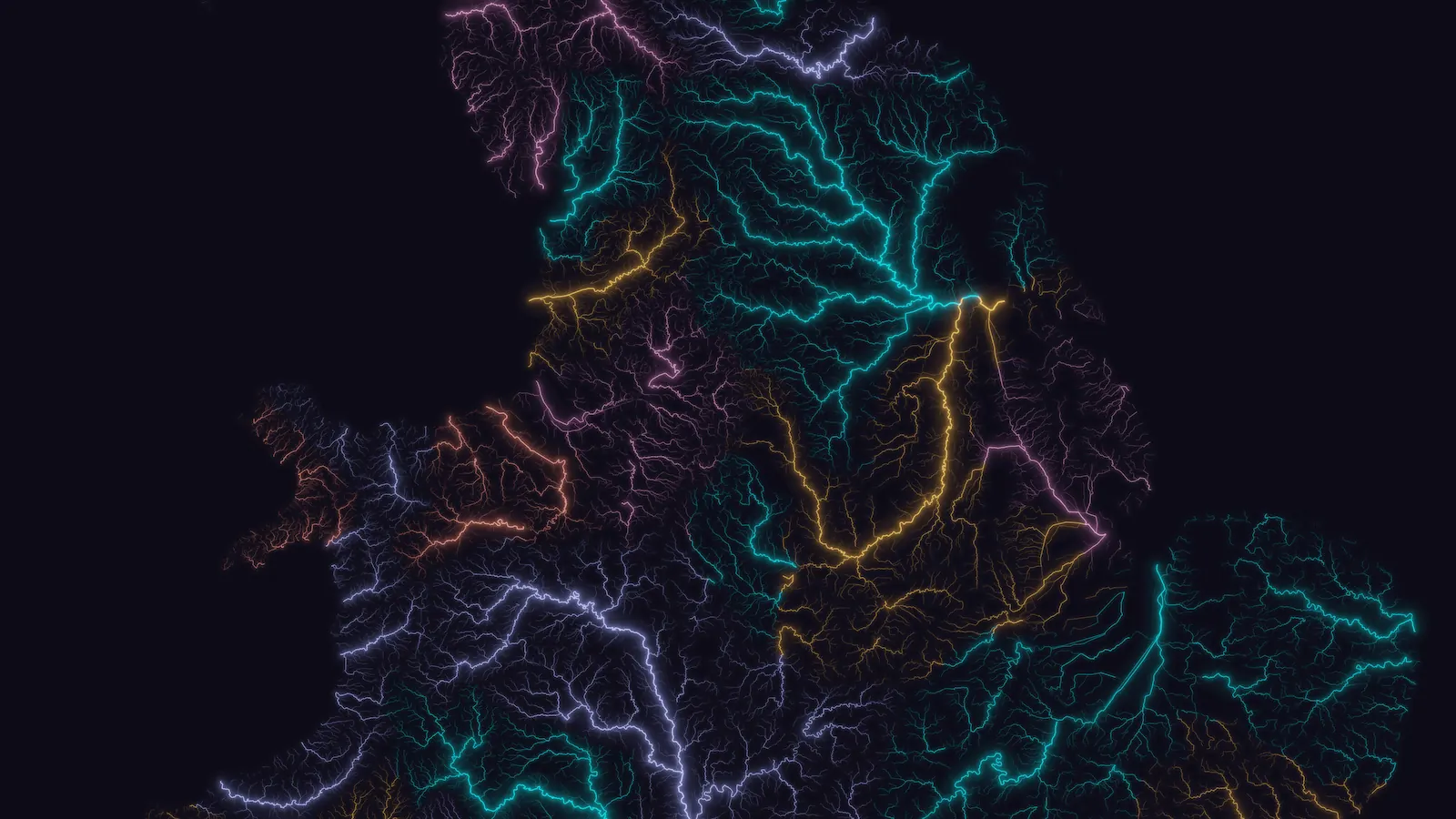
NW 135,000 E 535,000 N, SE 668,000 E 235,000 NDrawn for this siteContains OS data © Crown copyright and database rights 2026
About this map

The Wheel
Made by Moxi at Spatial Nexus, with ATLAS
Data: Ordnance Survey, Natural England (OGL v3.0)
#30DayMapChallenge 2026, Day 2Made by Moxi at Spatial Nexus, with ATLAS
About this map

Dartmoor by starlight
Made by Moxi at Spatial Nexus, with ATLAS
Data: Database of British and Irish Hills (CC BY 4.0); Natural England, Ordnance Survey (OGL v3.0)
#30DayMapChallenge 2026, Day 1Made by Moxi at Spatial Nexus, with ATLAS
About this map
Uganda's modelled malaria incidence came down between 2000 and 2020, from 503.7 per 1,000 people per year to 260.1. Reconstructed totals, which multiply that rate by the population, show no comparable trend, because population growth offset most of the fall.
The burden isn't spread evenly either. In the Eastern and Northern regions 26.00% of the land is a persistent hotspot, against 7.52% in Central and Western.
These findings come from the Uganda malaria study, run end to end by ATLAS, Spatial Nexus's AI research system, with me as its corresponding author.
Data: Malaria Atlas Project, P. falciparum incidence, release 202608, CC BY 3.0; WorldPop population, University of Southampton (CC BY 4.0). WorldPop does not endorse this work. From the Spatial Nexus Uganda malaria study, released 13 October 2026. Analysis and figure by Spatial Nexus, adapted from these data.
See the findings, the uncertainty and what the data couldn't support
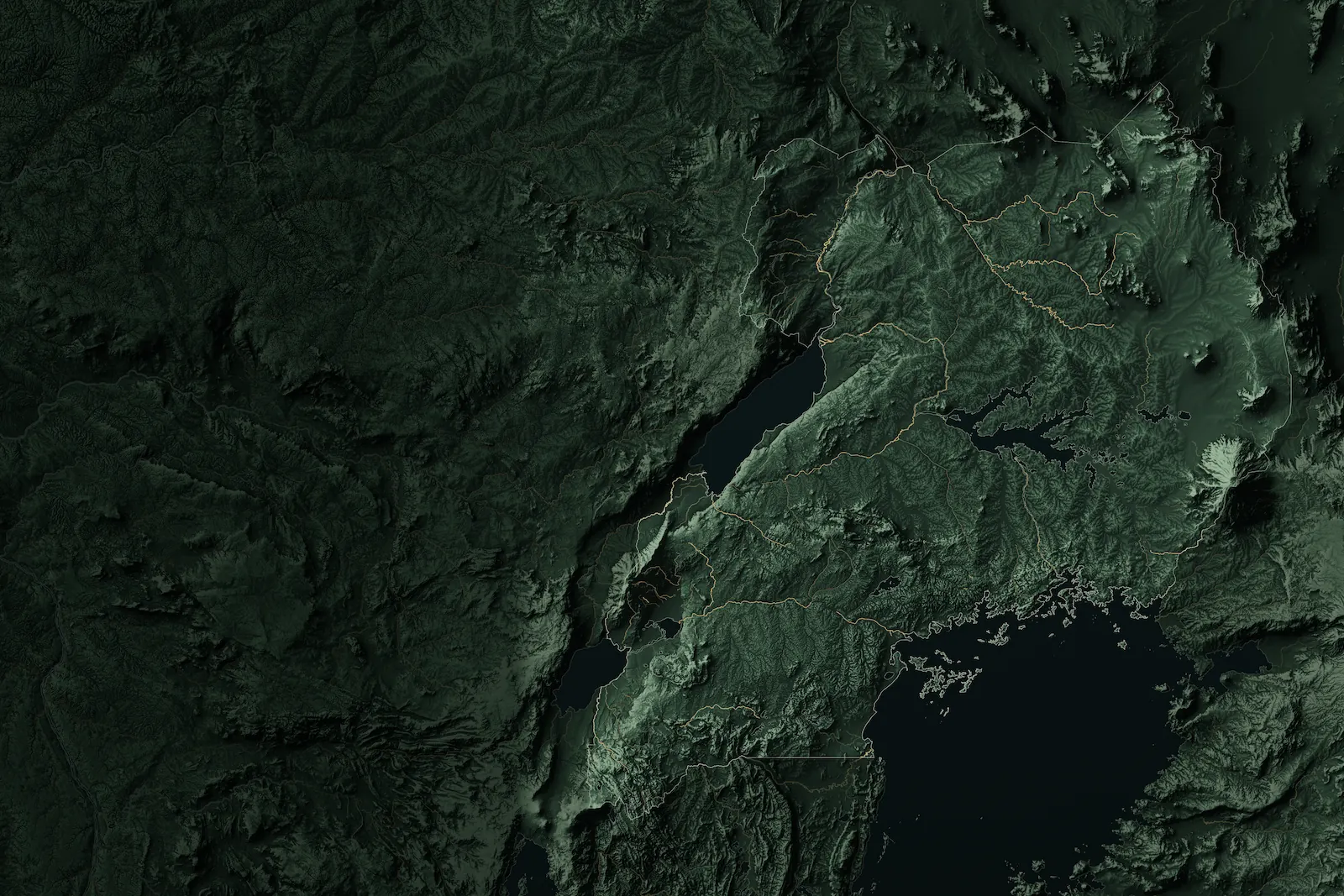
Uganda's terrain, drawn for this site. The study's figures are on the study page. Data: Copernicus, OpenStreetMap
You check it, which means the work has to show you how. ATLAS ran that study, and before it was released:
When the data couldn't support an answer, the study says so and explains why. It did not fit a national model of mosquito records, for instance, because the public archive's records fell in 3 grid cells against a minimum of 20 set before the analysis began.
An analysis for you would come with the same record of what was checked and what the data couldn't support.
Tell me about your projectThis is for when you need to know how something has changed over time, where it's concentrated and whether those hotspots last. The Uganda study, which ATLAS ran, does all three and gives the uncertainty beside its main results.
The two maps from November 2026 on the work page show how concentrated Britain's people are and how far Manchester's residents live from a park. Both were made by Moxi, Spatial Nexus's cartographer, with ATLAS, and their data sources are named underneath.
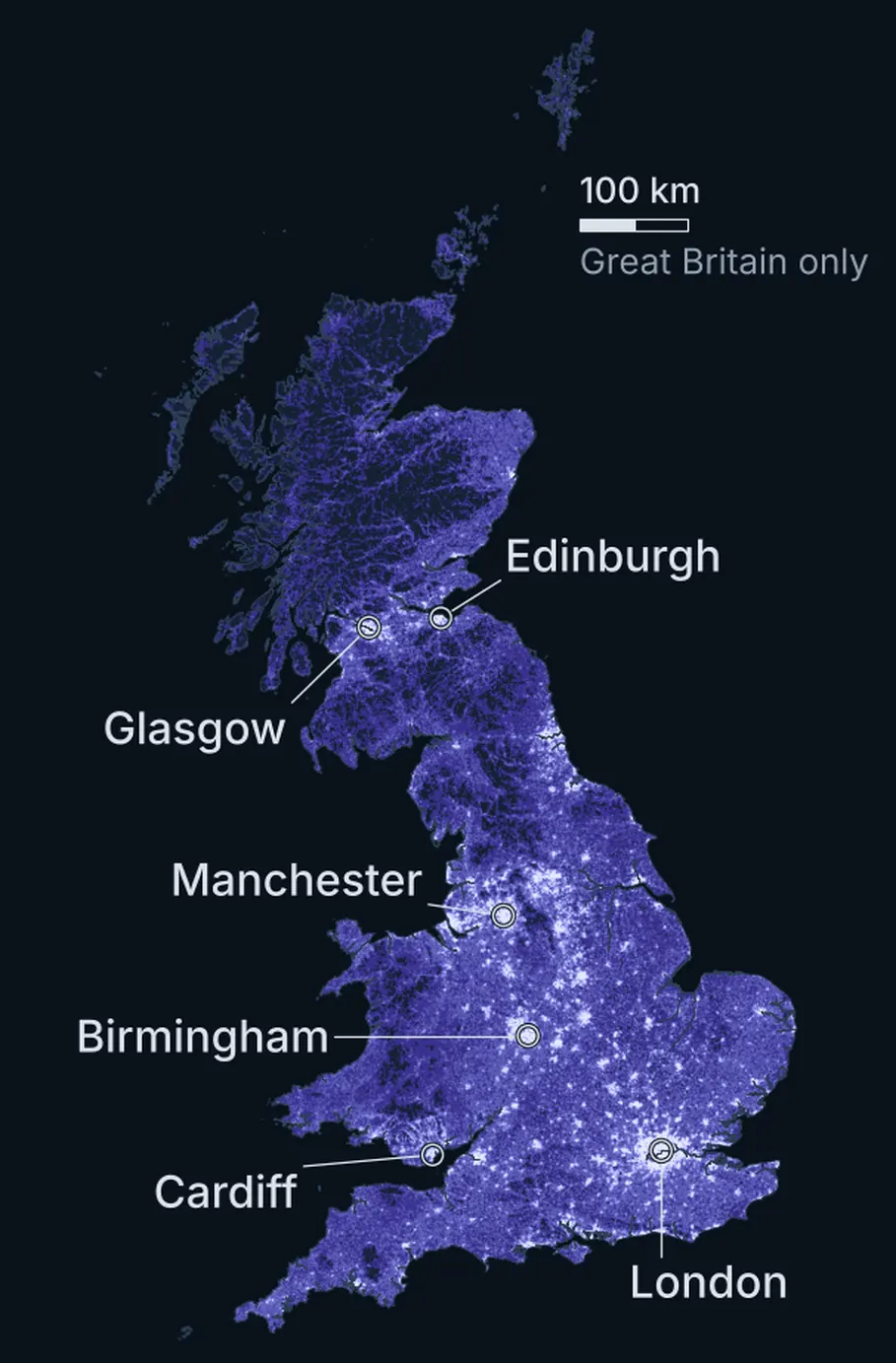
Half of Britain's people live on less than 5% of its land
Data: WorldPop (www.worldpop.org), University of Southampton, R2025A Global2, CC BY 4.0. Source: Office for National Statistics licensed under the Open Government Licence v.3.0; contains OS data © Crown copyright and database right 2025. Source: Office for National Statistics (Census 2021, TS001), licensed under the Open Government Licence v.3.0. © OpenStreetMap contributors.

In this work an AI system does the analysis. ATLAS runs geospatial research studies end to end, and on the Uganda study the rules were set before anyone saw a result and each number can be traced to where it came from.
How the Uganda study was producedThe rivers of the Humber, drawn for this site. Contains OS data © Crown copyright and database rights 2026
I'm the person you'd hold to account for the work, because I direct it and the Uganda study names me as its corresponding author. If you get in touch, your enquiry comes to me and I reply by email.